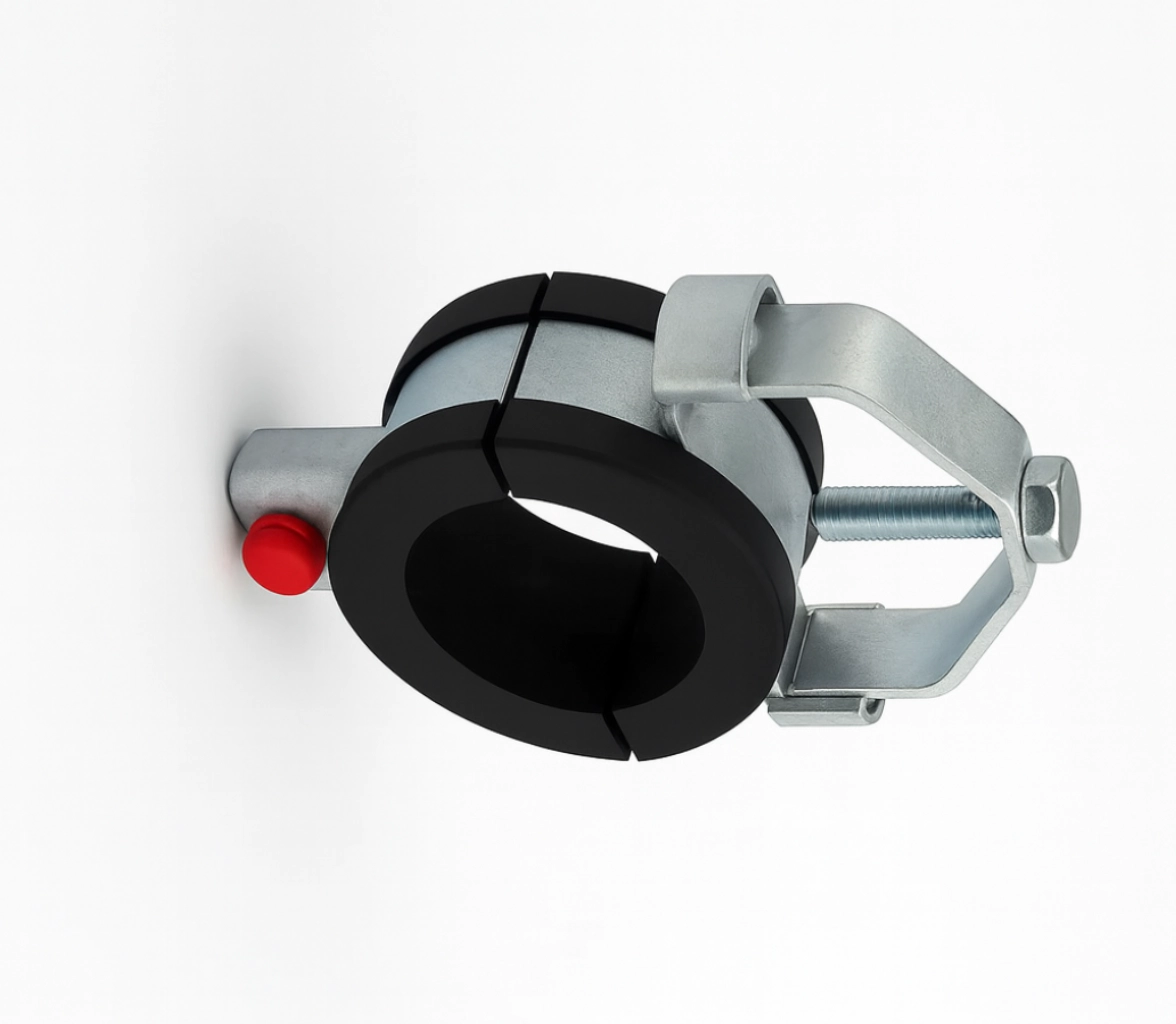
In Saudi Arabia’s industrial landscape—where heat, scale, and continuous operations collide—pipe support systems quietly determine whether infrastructure performs smoothly or slowly breaks down. Ever wondered why some piping networks last decades while others struggle within years? The answer often lies beneath the pipe itself, in a small yet powerful component: the support insert.
From petrochemical plants in Jubail to large-scale HVAC installations in Riyadh, the use of a rubber support insert in Saudi Arabia is no longer optional—it’s becoming a baseline expectation for durability, safety, and compliance.
The Saudi Environment: Tough on Pipes, Tougher on Supports
Saudi Arabia presents a unique challenge for industrial piping. Extreme daytime temperatures, sharp thermal expansion cycles, desert dust, and high humidity in coastal regions all place stress on metal pipes and their supports. Bare metal-to-metal contact, once common in older installations, simply doesn’t survive these conditions for long.
According to the U.S. Department of Energy, thermal expansion and vibration are among the leading contributors to premature piping failure in industrial facilities (energy.gov). When translated to Saudi conditions, those risks are amplified.
What Rubber Support Inserts Actually Do?
At first glance, a rubber insert may look like a basic cushioning layer. In practice, it performs several critical functions simultaneously—many of which engineers only fully appreciate after experiencing system failures.
- Vibration isolation: Rubber dampens micro-vibrations from pumps, chillers, and compressors before they travel through the piping network.
- Thermal movement control: It allows controlled pipe movement during expansion and contraction without damaging supports.
- Corrosion prevention: By separating metal pipes from metal supports, rubber inserts reduce crevice corrosion—a major issue in humid or saline environments.
The American Society of Mechanical Engineers highlights vibration control as a key factor in extending piping lifespan (asme.org). Rubber inserts tackle this at the source.
Why HVAC and Chilled Water Systems Depend on Them?
In Saudi Arabia, HVAC systems are not comfort add-ons—they’re mission-critical infrastructure. Chilled water pipes run continuously, often 24/7, under fluctuating loads. Without proper support insulation, these pipes are prone to:
- Energy losses due to thermal bridging
- Condensation-related corrosion
- Noise complaints from vibration transfer
Rubber support inserts create a thermal and mechanical break at pipe hangers, significantly improving system efficiency. This is especially relevant for hospitals, data centers, malls, and airports where downtime is simply not an option.
Choosing the Right Manufacturer Matters More Than You Think
Not all rubber inserts are created equal. Material composition, load-bearing capacity, temperature tolerance, and fire behavior all vary. This is where working with a reliable rubber support insert manufacturer in Saudi Arabia becomes critical.
Local manufacturers understand regional codes, Saudi Civil Defense requirements, and the realities of Gulf operating conditions. More importantly, they design products that align with Saudi Vision 2030’s emphasis on sustainable, long-life infrastructure.
Key Features to Look For
- High-density elastomer with proven load ratings
- Resistance to UV exposure and temperature extremes
- Compatibility with pipe support clamps and shoes
Cost vs. Value: The Long-Term Perspective
There’s a common misconception that rubber inserts are a “nice-to-have” upgrade. In reality, they are a cost-control measure. Studies from the U.S. Federal Energy Management Program show that vibration-related maintenance can account for up to 20% of mechanical system repair costs (energy.gov).
By reducing wear, preventing corrosion, and minimizing maintenance interventions, rubber support inserts pay for themselves—often faster than expected.
FAQs
1. Are rubber support inserts suitable for high-temperature pipes?
Yes, when manufactured with appropriate elastomer grades, rubber support inserts can handle elevated temperatures commonly found in industrial and HVAC piping systems.
2. Do rubber inserts comply with Saudi safety regulations?
High-quality inserts from local manufacturers are designed to meet Saudi Civil Defense and regional building code requirements.
3. Can rubber support inserts reduce pipe noise?
Absolutely. One of their biggest advantages is vibration and noise isolation, especially in HVAC and mechanical rooms.
4. Are they only used in HVAC systems?
No. They are widely used in industrial piping, chilled water lines, utility corridors, and even petrochemical facilities.
Final Thoughts
In Saudi Arabia’s demanding industrial environment, overlooking pipe support details is a costly mistake. Rubber support inserts may be hidden from view, but their impact is unmistakable—quieter systems, longer pipe life, and fewer failures. Sometimes, it’s the smallest components that make the biggest difference.
Full Audio: Listen Here