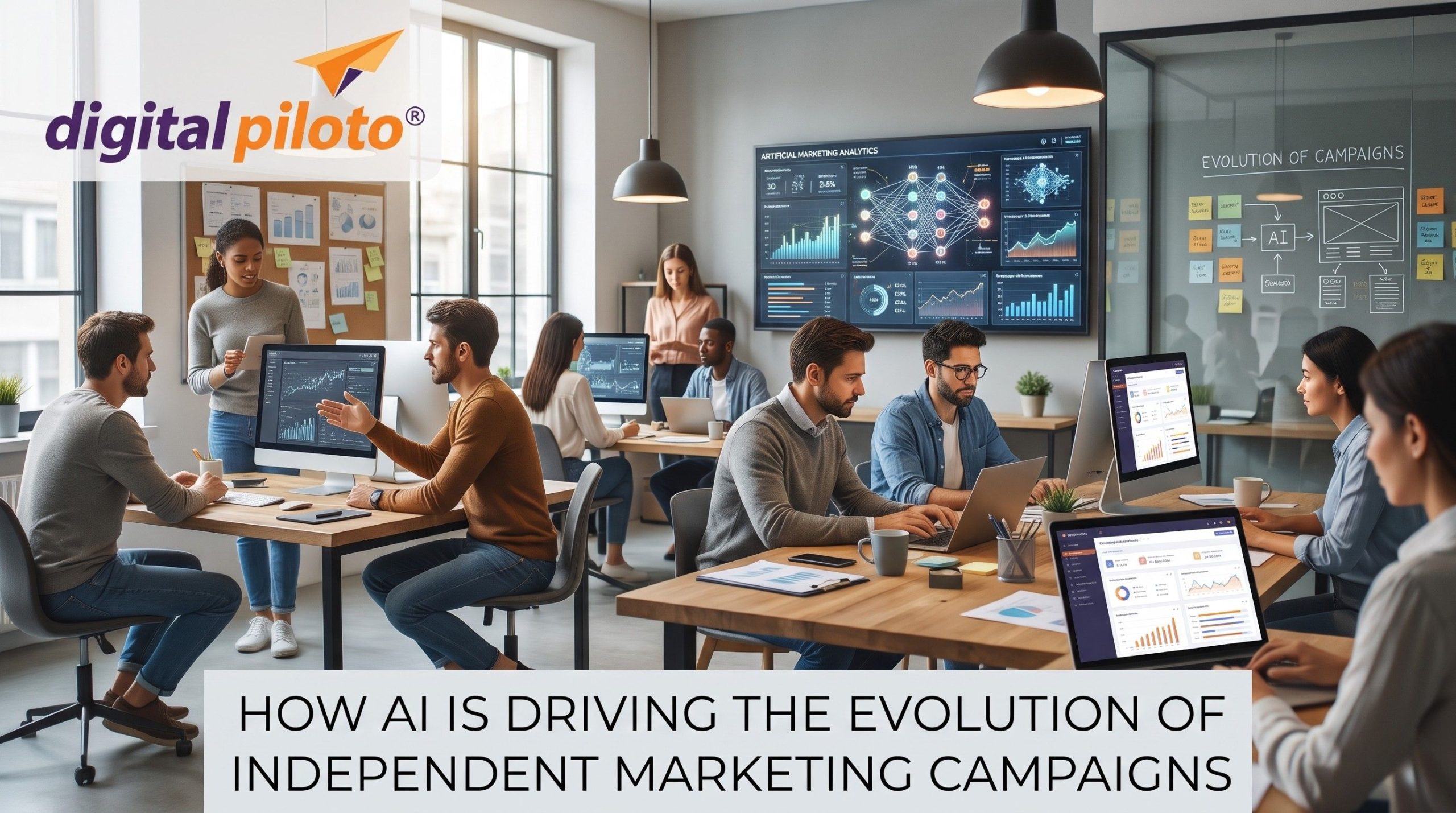
Marketing campaigns once depended on carefully planned schedules, fixed budgets, and teams making adjustments after reviewing performance reports. Today, artificial intelligence is changing that rhythm. Campaigns can analyse fresh signals, adapt messages, and automate routine decisions much faster. The result is a more flexible approach to marketing, where strategy and execution evolve together.
For businesses exploring digital marketing services in India, this shift creates an opportunity to move beyond rigid campaign structures. Instead of planning every detail months in advance, marketers can use AI-powered tools to understand changing customer behaviour and respond with greater precision. These campaigns are becoming more independent, although human direction remains essential.
What Are Independent Marketing Campaigns?
An independent marketing campaign is a campaign that can manage many operational activities with limited continuous human intervention. It may monitor performance, organise audience segments, adjust delivery schedules, recommend budget changes, personalise creative variations, and trigger follow-up communication based on defined conditions.
Think of a traditional campaign as a vehicle that follows a fixed route. Someone needs to check the map, notice traffic, and decide when to change direction. An AI-enabled campaign is closer to a navigation system that continuously evaluates conditions and suggests a better route. The destination still comes from the person driving, but the journey can become more responsive.
Independence does not mean that a campaign should operate without supervision. Businesses still need to establish objectives, approve budgets, define acceptable actions, and review outcomes. AI handles selected decisions and repetitive work within those boundaries.
Why AI Is Changing Campaign Management
Modern marketing produces a large amount of information. Website visits, search queries, advertising interactions, email responses, purchases, and customer service conversations can all reveal something about audience behaviour.
Reviewing every signal manually is difficult, particularly for organisations managing multiple channels. AI can help process this information, identify patterns, and surface opportunities that might otherwise be missed.
Faster Analysis and Decision Support
AI-powered analytics can help marketers identify changes in campaign performance without waiting for a lengthy reporting cycle. For instance, an ecommerce business might notice that a particular product category is receiving more interest from mobile visitors. The marketing team can investigate the trend and adjust relevant creative or landing-page experiences.
However, a pattern is not automatically a business opportunity. Marketers must check whether the change is meaningful, whether the data is reliable, and whether the proposed response supports the campaign objective.
Automation Beyond Scheduled Tasks
Traditional automation often follows straightforward instructions: send an email three days after registration, display an advertisement to a defined audience, or notify a sales representative when a form is submitted.
AI expands this approach by helping systems interpret more complex signals. A platform might identify customers who repeatedly explore a particular service category and recommend a relevant educational resource. Another system may help prioritise leads based on engagement patterns and predefined qualification criteria.
This makes marketing automation more adaptive, rather than simply faster.
How AI Is Making Campaigns More Independent
1. Intelligent Audience Segmentation
Traditional audience segmentation often relies on broad characteristics such as age, location, industry, or job role. These categories are useful, but they do not always explain what someone wants at a particular moment.
AI can analyse behavioural signals, including browsing patterns, product interests, previous purchases, and campaign interactions. It can then help identify groups with similar needs or engagement patterns.
Imagine a company selling business software. One group of visitors may be researching automation for the first time, while another is comparing enterprise integrations. Sending identical advertisements to both groups would be a missed opportunity. Different messages can address their respective questions.
2. Dynamic Content and Creative Optimisation
Creative production is often a bottleneck in campaign management. Teams need to develop headlines, advertisements, landing-page copy, email subject lines, and visual variations for different audiences.
Generative AI can support this process by helping marketers produce alternative drafts and adapt messages to different campaign contexts. Testing platforms can then compare approved variations and identify which versions perform better against selected objectives.
For example, a travel company might test creative messages focused on convenience, family experiences, and affordable packages. AI can help generate variations, while campaign data helps the team understand which message resonates with each audience segment.
The important point is to maintain brand consistency. Automated content should be reviewed for accuracy, tone, originality, and compliance before publication.
3. Smarter Budget Allocation
Advertising budgets rarely perform equally across every audience, placement, and channel. AI-supported bidding and optimisation systems can use performance signals to guide delivery decisions within the settings and constraints established by marketers.
A business may discover that one campaign generates more qualified enquiries during certain periods, while another produces better results from a different audience segment. Automated systems can help respond to these patterns, but marketers should retain oversight of spending limits and business priorities.
4. Predictive Lead Management
Not every visitor who downloads a guide is ready to speak with sales. Some are exploring a problem, while others are actively comparing providers. AI can help identify patterns associated with stronger purchase intent and support lead prioritisation.
When connected to a CRM system, these insights can help sales teams focus on relevant enquiries. A prospect who repeatedly views pricing and implementation pages, for example, may deserve a different follow-up from someone who has only read an introductory article.
Independent Campaigns Across Multiple Channels
Customers do not experience a brand through one platform. They might discover a product through search, watch a video on social media, visit a website, receive an email, and eventually contact a sales team.
AI can help coordinate these interactions by using shared campaign information and customer signals. Rather than treating every channel as a separate activity, businesses can create a more connected customer journey.
Common applications include:
- Search advertising: Automated bidding, performance analysis, and approved creative testing.
- Social media: Audience insights, content variations, scheduling assistance, and campaign monitoring.
- Email marketing: Behaviour-based segmentation, relevant follow-ups, and send-time experimentation.
- Website personalisation: Contextual recommendations and relevant landing-page experiences.
- CRM and sales: Lead scoring assistance, enquiry routing, and follow-up recommendations.
Connected systems can make campaigns more consistent. Still, integration matters. If customer records, product details, or campaign goals differ between platforms, automation may simply distribute inconsistent information faster.
The Technology Behind Autonomous Marketing
Independent campaigns usually rely on several technologies working together. AI models may analyse information or generate content, automation platforms execute workflows, analytics systems measure results, and CRM tools maintain customer context.
For a growing organisation, these components should not be treated as disconnected software purchases. A technology solutions company in India can help businesses evaluate how websites, data platforms, marketing tools, and operational systems connect to support a more intelligent digital environment.
Useful technology components may include:
- Customer data platforms and CRM systems: Help organise customer information and interaction history.
- AI analytics: Identify trends, segment audiences, and support forecasting.
- Marketing automation: Execute approved workflows across email, advertising, and customer journeys.
- Generative AI: Assist with campaign concepts, content variations, and creative development.
- Integration tools and APIs: Allow platforms to exchange information and coordinate activities.
The right technology stack depends on campaign complexity, data maturity, available resources, and the level of autonomy a business is prepared to allow.
Where Human Strategy Still Matters
It is tempting to assume that more automation automatically means better marketing. In reality, AI can make poor decisions just as efficiently as good ones if the objectives or information behind them are flawed.
Human involvement remains important in several areas:
- Brand positioning: People must decide what the business stands for and how it should communicate.
- Creative judgement: Human reviewers can identify tone problems, cultural misunderstandings, and messaging that feels inappropriate.
- Budget governance: Teams should approve spending boundaries and review unusual changes.
- Ethical decisions: Businesses need policies for privacy, consent, fairness, and responsible data use.
- Strategic direction: AI can optimise activities, but business leaders must determine which customers and outcomes matter most.
There is also a privacy dimension. Businesses should use customer information responsibly, explain relevant data practices, and follow applicable regulations. In India, organisations should pay attention to the Digital Personal Data Protection Act, 2023, and applicable rules and implementation requirements.
AI should support customer relationships, not make people feel watched or manipulated. That distinction is fundamental to long-term trust.
How to Measure AI-Driven Campaign Performance
Campaign independence is not a success metric by itself. A system can automate dozens of tasks and still fail to generate valuable business outcomes. Measurement should focus on whether the campaign is achieving its intended purpose.
Businesses should monitor indicators such as:
- Conversion rate: The proportion of relevant visitors or prospects completing a desired action.
- Cost per qualified lead: How much the business spends to generate leads that meet its qualification criteria.
- Customer acquisition cost: The overall cost of acquiring customers through defined channels.
- Return on advertising spend: Revenue attributed to advertising relative to advertising expenditure.
- Customer retention: Whether campaigns contribute to repeat purchases, renewals, or continued engagement.
- Operational efficiency: Whether automation reduces repetitive work without lowering quality.
Marketers should compare results against a clear baseline and, where possible, use controlled experiments to understand whether AI-driven changes caused an improvement. Attribution should also be treated carefully because customers often interact with multiple channels before converting.
SEO and Independent Campaigns: A Connected Strategy
AI-driven campaigns can attract attention through paid media and personalised communication, but organic discovery remains an important part of sustainable marketing. Search engines help potential customers find answers while researching products, services, and providers.
SEO supports independent campaigns by creating useful landing pages, educational resources, and relevant search entry points. These pages can also inform advertising messages and provide context for follow-up communication.
Businesses investing in search engine optimization services India can connect organic search strategy with AI-powered marketing workflows. For example, search query insights may reveal questions that deserve new content, while campaign analytics can show which topics attract more qualified enquiries.
The strongest approach combines discoverability, relevant messaging, and a consistent customer experience rather than expecting one channel to do all the work.
Frequently Asked Questions
1. What are AI-driven independent marketing campaigns?
They are marketing campaigns that use AI and automation to support activities such as audience analysis, content variation, budget optimisation, lead prioritisation, and performance monitoring with limited manual intervention.
2. Can AI run a marketing campaign without human supervision?
AI can automate selected campaign activities, but complete unsupervised operation is not advisable. People should define objectives, approve budgets, establish privacy safeguards, and review performance and unusual decisions.
3. How does AI improve marketing campaign performance?
AI can help analyse customer behaviour, identify audience patterns, personalise communication, support faster testing, and optimise selected campaign activities. Results depend on data quality, strategy, implementation, and ongoing evaluation.
4. Are AI-driven campaigns suitable for small businesses?
Yes. Small businesses can start with practical tools for email automation, customer segmentation, campaign reporting, and creative assistance. They can expand to more advanced workflows as their data and operational capabilities mature.
Final Thoughts: Let Intelligence Support Better Marketing
AI is making marketing campaigns more adaptive, but independence should never mean losing direction. Businesses get the most value when automation handles repetitive decisions while people protect strategy, creativity, and customer trust. The future belongs to campaigns that can respond intelligently, learn from reliable information, and remain accountable for the results they produce.
Blog Development Credits
Amlan Maiti shaped the original concept, supported by research and AI-assisted drafting, with editorial refinement and SEO improvements from Digital Piloto Private Limited.