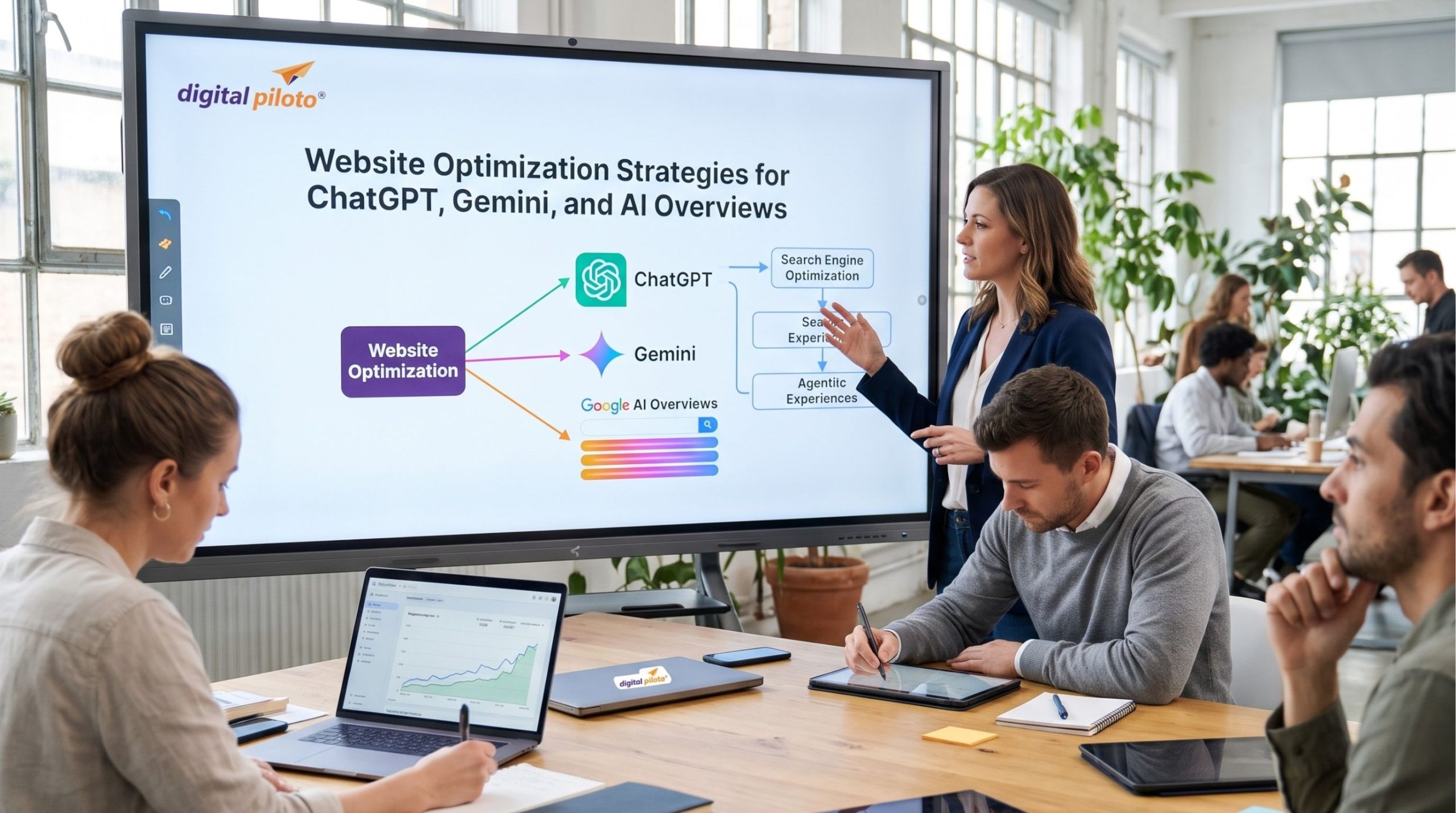
Search is no longer limited to ten blue links and a search box. People increasingly ask AI tools to compare products, explain complicated topics, and recommend businesses. For website owners, this creates a practical challenge: how can your content become easier for ChatGPT, Gemini, and Google AI Overviews to discover, understand, and reference without sacrificing the experience of human visitors?
Effective SEO marketing in India now needs to account for this changing discovery landscape. Yet the answer is not to abandon traditional SEO or fill pages with phrases designed for machines. Strong technical foundations, trustworthy information, clear content structure, and useful answers remain the sensible starting point for websites seeking visibility across search experiences.
Understand How AI Search Discovers Content
ChatGPT, Gemini, and Google AI Overviews may all provide conversational answers, but they do not operate as one shared search engine. Their systems, source-selection methods, and user experiences differ. A page referenced by one platform may not appear in another, and even similar questions can produce different results.
ChatGPT can search the web and provide links to sources in its responses. OpenAI explains that website owners should allow its search crawler, OAI-SearchBot, to access their public content if they want to help make their pages eligible for discovery through ChatGPT search. Inclusion is not guaranteed. You can review the official OpenAI publisher and developer guidance for details.
Google takes a different route within its own search environment. Its documentation explains that AI Overviews and AI Mode build on existing Search systems and that established SEO practices remain relevant. The company does not require special AI-specific schema markup or a separate optimisation formula to appear in these features.
The takeaway is simple: optimise for accessibility, relevance, and trust first. Then monitor how your website performs in each platform instead of assuming one improvement will produce identical results everywhere.
1. Strengthen Technical SEO Before Anything Else
Imagine publishing an excellent guide in a library where the doors are locked and the catalogue is missing. The information might be valuable, but discovering it becomes unnecessarily difficult. A website can face a similar problem when important pages are blocked, poorly linked, or inaccessible to search crawlers.
Start with the technical basics. Confirm that important pages return successful responses, can be crawled, and are eligible for indexing. Review your robots.txt rules, canonical tags, XML sitemap, redirects, and accidental noindex directives. These checks help search engines discover the right versions of your pages.
Check crawler access and rendered content
Review your site’s security rules, content delivery network, and firewall settings to ensure they do not unintentionally block relevant crawlers. For ChatGPT search visibility, specifically check whether OAI-SearchBot is allowed where appropriate. Follow OpenAI’s published documentation rather than relying on unofficial lists of crawler IP addresses.
If your website relies heavily on JavaScript, verify that essential information is available to search systems after rendering. A product page that displays its description, price, and specifications only after a complex interaction may be harder to interpret reliably than one with accessible, crawlable content.
Google recommends keeping pages crawlable, making content discoverable through internal links, and ensuring that important information is available in textual form. Technical accessibility does not guarantee visibility, but without it, even excellent content may struggle to be discovered.
2. Write Content That Answers Real Questions
One of the most useful changes you can make is to rethink how you plan content. Rather than asking only, “Which keyword should this page target?”, ask, “What problem is the visitor trying to solve, and what would a complete answer look like?”
Consider a company selling accounting software. A thin page might repeat the phrase “best accounting software for small businesses” without explaining much. A stronger resource would discuss pricing models, invoicing, tax reporting, integrations, usability, and the differences between solutions for freelancers and growing teams.
That additional context serves readers and creates clearer connections between the page and related questions. It also gives AI-powered systems more substantive material to evaluate when assembling an answer.
Make the important information easy to find
Use a clear heading hierarchy, descriptive section titles, and direct explanations. Put the core answer near the beginning of a section, then add the reasoning, examples, caveats, and supporting detail. Avoid padding an article with repeated introductions or generic paragraphs that do not move the reader forward.
A useful content page often includes:
- A direct explanation: Define the topic or answer the central question without unnecessary delay.
- Supporting context: Explain why the answer matters, how it works, and where it applies.
- Specific evidence: Add original examples, documented findings, expert commentary, or credible sources where relevant.
- Practical next steps: Help readers decide what to do, compare options, or explore a related resource.
This is not a trick for making AI systems select your content. It is a way to make the page genuinely useful, which is a much stronger foundation for long-term search performance.
3. Build Trust With Verifiable Information
AI-generated answers can summarise information quickly, but users still need to know whether that information is reliable. Websites that make their claims clear, provide evidence, and demonstrate real expertise give readers better reasons to trust them.
Start by identifying the claims on your website that deserve supporting evidence. Statistics should link to the original research whenever possible. Technical recommendations should reference reliable documentation. Product comparisons should use clear criteria rather than unsupported declarations that one option is “the best.”
Show who is responsible for the content. Author biographies, relevant experience, editorial review, publication dates, and update notes can help visitors assess the material. These elements should reflect genuine expertise and actual editorial practices, not be added merely to create the appearance of authority.
Google’s people-first content guidance emphasises useful, reliable information created to serve people. That principle is particularly valuable when preparing content for AI-assisted discovery: the page should stand on its own even if no AI system ever references it.
4. Use Structured Data Without Overestimating It
Structured data provides standardised clues about the information on a page. Depending on the content, relevant schema types may describe an organisation, a local business, a product, a person, or an article.
When used correctly, structured data can help search engines interpret page details and may make a page eligible for certain enhanced search appearances. It should accurately reflect information visitors can see and must follow the relevant search engine guidelines.
However, structured data is not a secret pass into AI-generated answers. Google explicitly states that no special schema.org markup is required for AI Overviews or AI Mode. Adding FAQ, Article, or Organisation markup solely in the hope of securing an AI citation is not a dependable strategy.
Instead, use schema where it makes sense for the page and validate the implementation. Keep business names, addresses, products, and other important details consistent between your structured data and visible content. Treat markup as supporting infrastructure rather than a replacement for useful information.
5. Improve Site Experience and Content Accessibility
Even when AI search helps a visitor discover your website, the experience after the click still matters. A slow page, intrusive pop-up, confusing layout, or unreadable mobile design can undermine the value of that discovery.
Review your Core Web Vitals and broader usability. Compress oversized images, remove unnecessary scripts, use caching appropriately, and ensure that navigation works on mobile devices. Pay attention to accessibility, too: descriptive link text, meaningful headings, image alternative text, and readable contrast help people navigate your site more effectively.
Multimedia can strengthen a page when it adds genuine value. A demonstration video may explain a product feature better than several paragraphs; an original diagram may clarify a complicated process. But important information should not exist only inside an image or video when a text explanation is practical.
A digital innovation company in India working on website improvements should therefore consider technical performance, content accessibility, and conversion experience together. AI visibility is only one part of a website’s job. The site must also help visitors understand the offer and take the next step.
6. Strengthen Internal Links and Topic Relationships
Internal links help visitors move between related pages and help crawlers discover content. They also make your website’s information architecture easier to understand. A service page, for example, can link to a relevant case study, implementation guide, pricing explanation, or frequently asked question.
Build these connections around actual user needs. A page about ecommerce development might link to guides on checkout optimisation, product-page usability, payment integration, and website security. Each link should provide a sensible next step, not simply repeat a target keyword.
Use descriptive anchor text that tells readers what they will find. Keep your most important pages accessible through clear navigation and relevant contextual links. Avoid orphan pages that receive no meaningful internal links, and review older articles to find opportunities to connect them with newer resources.
Topic clusters can be useful here. A central guide covers the broader subject, while supporting pages address specific questions in depth. This approach helps organise information without forcing every related keyword into one enormous article.
7. Measure AI Search Visibility and Business Results
Optimisation is difficult to improve when you cannot tell what is working. Traditional metrics such as organic clicks, impressions, rankings, and conversions remain useful, but you may also want to monitor how your content appears in AI-powered search experiences.
Google’s official documentation describes reporting options for generative AI features in Search Console. Available reporting can change, so consult the current Google guide to generative AI search optimisation for the latest capabilities and limitations.
For ChatGPT, review identifiable referral traffic in your analytics platform and track the landing pages visitors reach. Where available, add a structured process for recording AI citations and brand mentions across a consistent set of relevant questions. Keep in mind that manual checks and third-party tools provide snapshots, not complete access to an AI platform’s internal systems.
Use a practical measurement routine:
- Establish a baseline: Record current organic performance, important landing pages, conversions, and observed AI visibility.
- Test relevant questions: Use a repeatable set of customer queries across the platforms that matter to your audience.
- Review content quality: Check whether your pages answer the question accurately and offer something distinctive.
- Compare over time: Look for consistent changes rather than reacting to a single answer or one-day fluctuation.
- Connect the findings to business goals: Track qualified enquiries, purchases, and other meaningful outcomes alongside visibility.
A digital marketing services in India strategy should connect these insights with content planning, technical improvements, and conversion optimisation. More mentions may be encouraging, but qualified traffic and customer outcomes provide a stronger view of business value.
Frequently Asked Questions
1. Do I need a separate SEO strategy for ChatGPT, Gemini, and AI Overviews?
You need to understand the differences between these platforms, but you do not need to abandon foundational SEO. Make your site crawlable, publish reliable content, use clear structure, and monitor each platform separately where possible. Their results can differ, and no single tactic guarantees inclusion everywhere.
2. Does adding FAQ schema help a website appear in AI answers?
FAQ schema can describe eligible FAQ content for supported search features, but it does not guarantee AI citations or enhanced results. Use structured data only when it accurately represents visible page content and follows the applicable guidelines.
3. Should I create content specifically for AI search engines?
Focus on answering customer questions clearly rather than writing awkward content for a machine. Helpful explanations, original insights, trustworthy sources, and sensible page structure support both human readers and search discovery. Avoid publishing large volumes of repetitive, low-value pages.
4. How can I check whether ChatGPT can discover my website?
Review your robots.txt rules, hosting and firewall restrictions, and OpenAI’s current crawler guidance. Allow OAI-SearchBot where appropriate, then monitor identifiable referral traffic and relevant mentions. Crawler access improves eligibility for discovery but cannot guarantee that ChatGPT will cite a particular page.
Final Thoughts
Preparing a website for ChatGPT, Gemini, and Google AI Overviews is not about finding a hidden formula. It is about making your information accessible, accurate, well organised, and genuinely worth referencing. Strengthen your technical SEO, demonstrate real expertise, connect related content, and measure meaningful outcomes. As AI search evolves, these fundamentals give your website a more resilient foundation for discovery.
Blog Development Credits
Amlan Maiti shaped the concept, with AI-assisted research and drafting; Digital Piloto Private Limited refined the article’s SEO and final presentation.