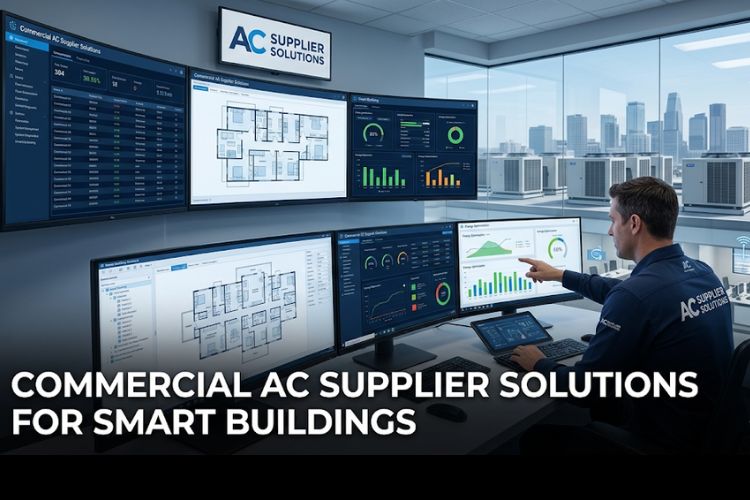
Walk into any smart office, hospital, or retail hub today, and you’ll notice something subtle yet powerful—perfect climate control. Not too cold, not too warm. But behind that seamless comfort lies a strategic decision. For business owners, choosing the right cooling partner isn’t just about machines—it’s about future-ready efficiency and control.
That’s where a trusted Commercial AC Supplier steps in. Especially in smart buildings, HVAC systems are no longer standalone units—they’re integrated, intelligent ecosystems designed to optimize energy use, enhance productivity, and reduce operational headaches.
Why Smart Buildings Need Smarter AC Solutions
Smart buildings aren’t just a buzzword anymore. They rely on automation, sensors, and data to run efficiently. Cooling systems play a surprisingly central role in this transformation.
According to the U.S. Department of Energy, HVAC systems account for nearly 40% of total energy use in commercial buildings. That’s a massive chunk—one that smart AC solutions aim to optimize.
What makes modern AC systems “smart”?
- IoT Integration: Systems adjust temperature based on occupancy and usage patterns.
- Remote Monitoring: Facility managers can control operations from anywhere.
- Energy Analytics: Real-time insights help reduce unnecessary energy consumption.
For a business owner, this means lower utility bills and fewer surprises during peak seasons.
Key Features to Expect from a Commercial AC Supplier
Not all suppliers are equipped for smart building demands. A forward-thinking supplier focuses on both technology and long-term value.
Here’s what to look for:
- Customized System Design
Every building is different. From corporate offices to warehouses, the cooling strategy must align with usage patterns. - Energy-Efficient Equipment
Look for inverter-based systems, VRF/VRV technology, and green-certified units that reduce environmental impact. - Integration Capability
Your AC system should sync effortlessly with building management systems (BMS). - After-Sales Support
A reliable supplier doesn’t disappear after installation—they stay invested in performance.
In real-world terms, this means fewer breakdowns, smoother operations, and predictable costs—something every business owner values.
The Role of Maintenance in Smart Cooling
Even the smartest systems need consistent care. Think of it like a high-performance car—it won’t run efficiently without regular servicing.
This is where partnering with a professional Commercial HVAC Service Provider becomes essential. They ensure that your systems remain aligned with smart building standards.
Benefits of regular HVAC maintenance:
- Improved Energy Efficiency: Clean systems consume less power.
- Extended Equipment Life: Preventive care reduces wear and tear.
- Reduced Downtime: Early issue detection avoids costly breakdowns.
Interestingly, studies from ASHRAE suggest that regular HVAC maintenance can improve efficiency by up to 15–20%. That’s not a small margin—it’s a strategic advantage.
Emerging Trends in Commercial Cooling Solutions
The future of commercial air conditioning is evolving rapidly, and smart buildings are at the center of this shift.
Some trends worth watching:
- AI-Driven Climate Control: Systems learn user behavior over time.
- Sustainable Refrigerants: Eco-friendly options reduce carbon footprint.
- Zone-Based Cooling: Different areas receive customized temperature settings.
For businesses, adopting these innovations isn’t just about staying current—it’s about staying competitive.
How the Right Supplier Impacts Your Business
Here’s something many business owners overlook: your AC supplier directly affects your operational efficiency. A well-designed system improves employee comfort, enhances customer experience, and even protects sensitive equipment.
Imagine a retail store where customers feel comfortable browsing longer, or an office where employees remain productive even during peak summer. That’s the invisible impact of a smart HVAC setup.
FAQs
What is a smart HVAC system?
A smart HVAC system uses sensors, automation, and data analytics to optimize temperature control, energy use, and performance in real time.
Why should businesses invest in smart AC solutions?
Smart AC solutions reduce energy costs, improve comfort, and offer better control over operations, making them a long-term cost-saving investment.
How often should commercial HVAC systems be serviced?
Ideally, commercial HVAC systems should be serviced at least twice a year to ensure optimal performance and prevent unexpected failures.
Can smart AC systems integrate with existing building systems?
Yes, most modern systems are designed to integrate with building management systems, enabling centralized control and monitoring.
Final Thoughts
Smart buildings demand more than basic cooling—they require intelligent, adaptable systems that evolve with your business. Choosing the right commercial AC partner isn’t just a technical decision; it’s a strategic one. When done right, it transforms comfort into efficiency, and efficiency into long-term growth.