Home Fix It UAE understands how frustrating it can be when your submersible pump suddenly trips the breaker, especially when you rely on it for a consistent water supply. A breaker that keeps switching off isn’t just inconvenient—it often signals an underlying electrical or mechanical problem that shouldn’t be ignored.
If you’re experiencing this issue, professional Submersible Pump Repair can prevent expensive damage and restore reliable performance. While resetting the breaker may seem like a quick fix, repeated tripping usually means your pump is working harder than it should. Identifying the cause early can save both time and money while protecting your home’s water system.
Why Does a Submersible Pump Trip the Breaker?
A circuit breaker protects your electrical system from excessive current. When it trips repeatedly, it’s doing exactly what it was designed to do—prevent overheating, electrical fires, or equipment failure. Instead of replacing the breaker immediately, it’s important to understand what’s forcing it to shut down.
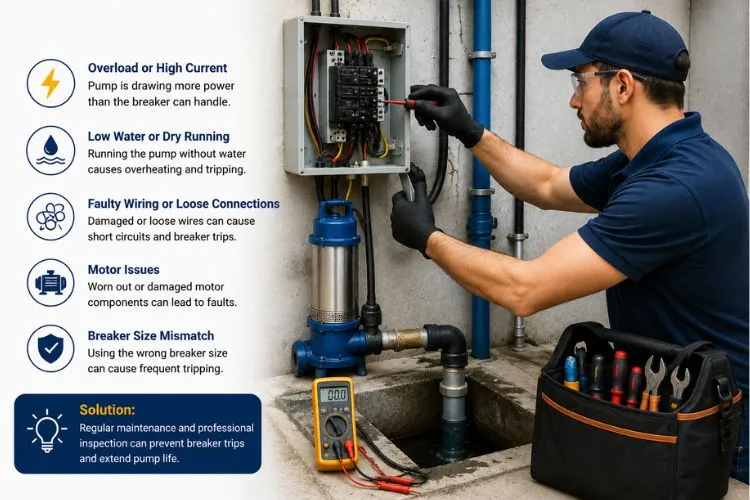
1. Motor Overload
The most common culprit is a motor working beyond its normal capacity. As motors age, internal components wear out, increasing electrical resistance and forcing the breaker to disconnect power. Pumps running continuously due to water demand or pressure issues are especially vulnerable.
2. Damaged Electrical Wiring
Underground wiring, moisture exposure, or deteriorated insulation can create short circuits. Even a small wiring fault can increase current flow enough to trip the breaker repeatedly.
3. Dry Running Conditions
A submersible pump depends on surrounding water to cool the motor. When groundwater levels drop or the pump runs without sufficient water, overheating occurs rapidly.
- Low water table during summer months
- Blocked intake screens
- Incorrect pump depth
- Faulty level sensors
Mechanical Problems That Often Go Unnoticed
Electrical faults aren’t always to blame. Mechanical issues frequently increase motor load until the breaker reacts.
Blocked Impeller
Sand, debris, mineral deposits, or foreign objects can jam the impeller. The motor then struggles to rotate normally, drawing excessive current.
Worn Bearings
Bearings naturally wear over time. As friction increases, the motor requires more power to maintain operation.
Pressure Switch Problems
A faulty pressure switch may cause rapid on-and-off cycling, commonly called short cycling. Frequent starts place heavy stress on the electrical system and significantly reduce motor lifespan.
Warning Signs You Shouldn’t Ignore
Many homeowners notice small symptoms weeks before complete pump failure.
- Breaker trips more frequently than usual.
- Reduced water pressure throughout the home.
- Buzzing or humming sounds from the pump.
- Higher electricity bills without increased water use.
- Pump starts and stops every few seconds.
If these symptoms appear together, scheduling an inspection is far less expensive than replacing an entire pumping system.
Simple Maintenance Can Prevent Costly Repairs
Routine servicing dramatically improves pump reliability. According to the U.S. Department of Energy, properly maintained electric motors operate more efficiently and experience fewer unexpected failures, helping homeowners reduce energy consumption over time.
Similarly, regular maintenance of household systems—including services like Ac Maintenance Dubai—helps prevent sudden breakdowns and extends equipment life. Preventive care almost always costs less than emergency repairs.
Professional Inspection Usually Includes:
- Testing motor current draw
- Checking insulation resistance
- Inspecting pressure switches
- Examining wiring connections
- Cleaning pump components
- Verifying proper water levels
Can You Fix It Yourself?
Resetting a breaker once after a temporary overload is generally safe. However, repeatedly resetting it without identifying the root cause may damage both the pump and your home’s electrical system.
Because submersible pumps combine electricity and water, diagnosing electrical faults should always be left to qualified professionals. Specialized testing equipment can quickly determine whether the problem involves the motor, wiring, capacitor, or pressure controls.
Also Read: Reliable Water Starts with a High-Quality Water Pump Replacement
Frequently Asked Questions
Q. Why does my breaker trip immediately when the pump starts?
A. This often indicates a short circuit, seized motor, damaged wiring, or excessive starting current requiring professional inspection.
Q. Can a bad capacitor trip the breaker?
A. Yes. A failed start capacitor forces the motor to draw higher current, which may cause the breaker to disconnect power.
Q. How long should a submersible pump last?
A. With proper installation and regular maintenance, many residential submersible pumps operate efficiently for 8–15 years, depending on water quality and usage.
Q. Should I keep resetting the breaker?
A. No. Repeatedly resetting a tripping breaker can worsen electrical damage and create safety risks. It’s best to have the system professionally inspected.
Final Thoughts
A breaker that repeatedly trips is your home’s way of warning that something isn’t right. Whether the issue is electrical, mechanical, or related to water levels, early diagnosis prevents expensive repairs and unexpected downtime. Regular inspections, preventive maintenance, and prompt professional service help keep your submersible pump operating safely, efficiently, and reliably for years to come.
Blog Development Credit
Powered by research from ChatGPT and Google Gemini, this article has been professionally structured, SEO-optimized, fact-checked, and finalized by Home Fix It UAE. We are committed to publishing high-quality content that helps readers make informed home maintenance decisions.