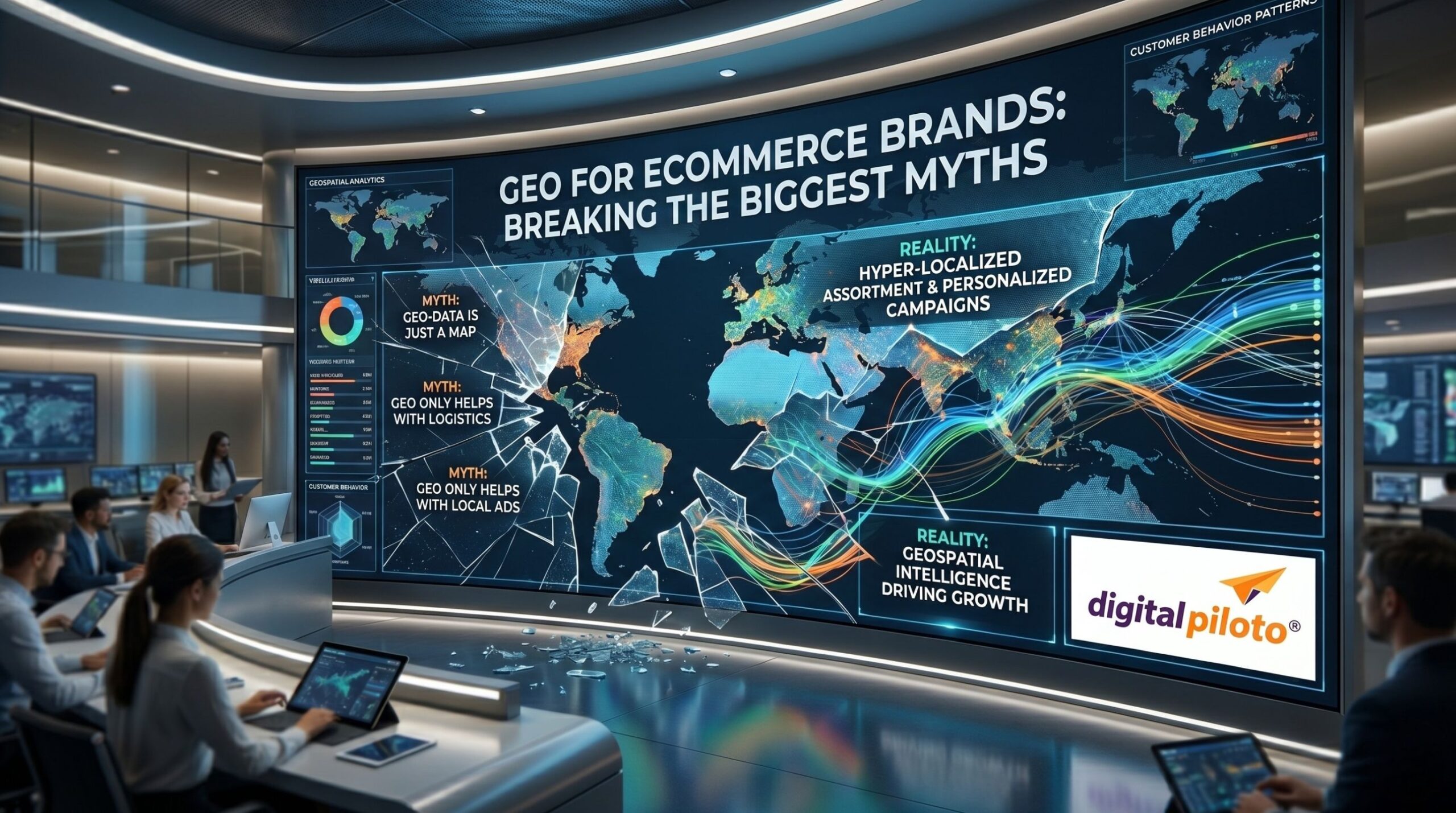
Generative Engine Optimization (GEO) for e-commerce is not about gaming AI systems—it’s about making your products, content, and brand easy for AI to understand, trust, and recommend. Many founders still misunderstand this shift. If you’re evaluating an SEO company Kolkata, they should already be correcting these GEO myths, not reinforcing them.
What is Generative Engine Optimization (Definition Format)
Generative engine optimization is the process of optimizing your e-commerce content so AI systems (like ChatGPT or Google SGE) can extract, interpret, and recommend your products accurately.
- Traditional SEO: Focuses on rankings and clicks
- GEO: Focuses on AI visibility and recommendation signals
- Goal: Be included in AI-generated answers and product suggestions
In e-commerce, this means your product pages must do more than rank—they must “make sense” to machines.
Why E-commerce Brands Misunderstand GEO
E-commerce teams are used to performance metrics like traffic and ROAS. GEO shifts the game toward visibility inside AI-generated answers, which is harder to measure directly.
From what I’ve seen, most brands don’t fail because they ignore GEO—they fail because they apply old SEO thinking to a new system.
That’s where myths come in.
Myth #1: GEO is Just SEO with a New Name
This is the most common misunderstanding.
Reality: GEO requires a different approach. SEO optimizes for search engines; GEO optimizes for AI interpretation.
- SEO cares about keywords
- GEO cares about context and clarity
- SEO ranks pages
- GEO surfaces answers and recommendations
If your product pages are keyword-heavy but lack structured clarity, they won’t perform in AI environments.
Myth #2: More Content = Better GEO Performance
Many e-commerce brands believe publishing more blogs or product descriptions will improve visibility.
Reality: Volume without structure creates noise.
AI systems prioritize:
- Clear product descriptions
- Consistent attributes (price, features, use cases)
- Logical content hierarchy
In short, 10 well-structured pages outperform 100 shallow ones.
Myth #3: Product Pages Don’t Need Context
Most e-commerce product pages are transactional—features, price, and “buy now.”
Reality: AI needs context to recommend products.
For example, instead of just listing specs, include:
- Who the product is for
- When it should be used
- How it compares to alternatives
This builds stronger recommendation signals.
Myth #4: GEO Doesn’t Impact Conversions
Some brands assume GEO is only about visibility, not revenue.
Reality: Better recommendations lead to higher-intent traffic.
When users discover your product through AI-generated suggestions, they’re already closer to a decision.
This is why integrating generative engine optimization services into your strategy is no longer optional.
Myth #5: GEO is Only for Big Brands
This couldn’t be more wrong.
Reality: GEO levels the playing field.
AI doesn’t just favor big brands—it favors clarity and relevance. Smaller ecommerce businesses can outperform larger competitors if their content is better structured and more useful.
Step-by-Step: Fixing GEO for E-commerce
Step 1: Audit Product Clarity
Check if your product pages answer key questions:
- What is it?
- Who is it for?
- Why choose this over alternatives?
Step 2: Add Structured Context
Include:
- Use cases
- Comparisons
- FAQs
Step 3: Standardize Attributes
Ensure consistency across all products:
- Naming conventions
- Feature descriptions
- Pricing formats
Step 4: Improve Internal Linking
Connect related products and categories logically.
Step 5: Align Marketing Channels
If your messaging differs across campaigns from a digital marketing agency near me, it weakens your overall GEO performance.
What Strong GEO Looks Like (Bullet Explanation)
- Clear product narratives: Not just specs, but stories and use cases
- Consistent data: Structured and repeatable across pages
- Answer-ready content: Easy for AI to extract and summarize
- Trust signals: Reviews, comparisons, and transparency
This is what drives recommendation signals in AI systems.
Real Insight: What Actually Moves the Needle
A D2C ecommerce brand I worked with had strong traffic but weak conversions. Their GEO issue was simple: unclear product positioning.
We didn’t add more content. We clarified existing pages:
- Rewrote product intros for clarity
- Added comparison sections
- Standardized product attributes
The result? Higher engagement and better inclusion in AI-generated recommendations.
No hacks—just clarity.
FAQs
1. What is generative engine optimization in e-commerce?
It’s the process of optimizing product and content data so AI systems can understand and recommend your products effectively.
2. How is GEO different from SEO?
SEO focuses on rankings, while GEO focuses on AI-driven visibility and recommendations.
3. Do small e-commerce brands benefit from GEO?
Yes. GEO rewards clarity and relevance, allowing smaller brands to compete effectively.
4. What are recommendation signals?
They are indicators (like clarity, consistency, and trust) that help AI systems decide whether to suggest your product.
5. How long does GEO take to show results?
Improvements in engagement and AI visibility can appear within a few weeks to a few months, depending on implementation.
Conclusion
GEO isn’t about chasing algorithms—it’s about making your ecommerce content genuinely understandable. The brands that win won’t be the loudest; they’ll be the clearest. Fix the myths, focus on clarity, and the results will follow.
Blog Development Credits:
This article was conceptualized by Amlan Maiti, developed using advanced AI platforms like ChatGPT, Gemini, and Copilot, and refined with strategic SEO insights from Digital Piloto Private Limited.