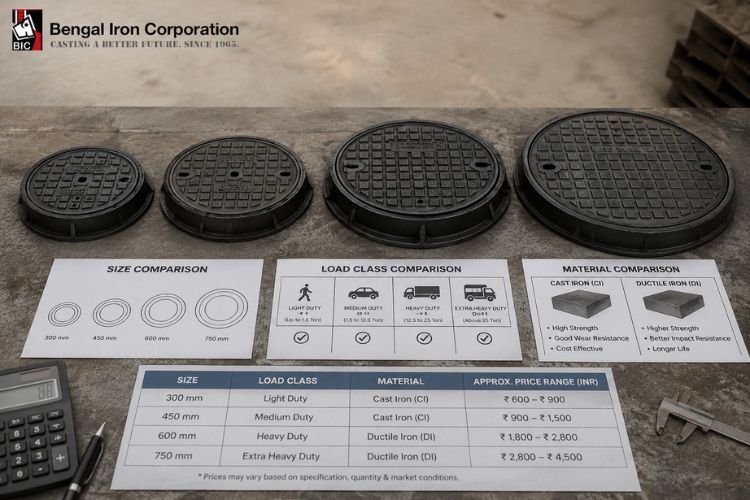
When planning a home renovation or upgrading an outdoor drainage system, most people focus on tiles, landscaping, or plumbing. Yet one small component quietly protects the entire underground network—the chamber cover. Understanding what influences the cost helps you make a smarter purchase instead of simply picking the cheapest option.
Before comparing products, it’s worth understanding how the Cast Iron Chamber Cover price varies. The final cost depends on factors such as dimensions, load-bearing capacity, material quality, manufacturing standards, and finish. Investing in the right cover today can reduce maintenance expenses and improve safety for years to come.
Why Chamber Cover Prices Differ
Many buyers assume that all cast iron chamber covers are similar. In reality, each product is designed for a specific application. A lightweight cover suitable for a residential walkway costs considerably less than one engineered for busy commercial roads.
The following elements have the biggest influence on pricing:
- Size: Larger covers require more raw material and manufacturing effort.
- Load Class: Covers built for heavy traffic undergo stricter engineering and testing.
- Material Grade: Higher-quality cast iron offers improved durability and corrosion resistance.
- Surface Finish: Protective coatings help extend service life in challenging environments.
How Size Affects the Cost
Choosing the correct size is about more than appearance. It ensures proper coverage of inspection chambers while maintaining structural integrity.
Common Residential Sizes
- 300 × 300 mm – Ideal for garden drainage and inspection chambers.
- 450 × 450 mm – Frequently used around homes and apartment complexes.
- 600 × 600 mm – Suitable for commercial premises and utility chambers.
- Customized dimensions – Used for infrastructure and municipal projects.
As dimensions increase, the amount of cast iron required also rises, naturally increasing manufacturing costs.
Understanding Load Classes
Load class often has a greater impact on price than size. European Standard EN 124 categorizes chamber covers according to the weight they are designed to withstand. This internationally recognized standard is widely referenced by manufacturers and infrastructure projects worldwide.
According to the European Committee for Standardization (CEN), EN 124 specifies load classifications ranging from pedestrian areas to heavy-duty highway applications. Source: https://standards.cencenelec.eu
- A15: Suitable for gardens, footpaths and pedestrian areas.
- B125: Used in parking spaces and residential driveways.
- C250: Designed for roadside drainage applications.
- D400: Built for highways, industrial facilities and heavy traffic.
Higher load ratings require additional engineering, increased material thickness and extensive quality testing, which explains their higher market price.
Material Comparison: Cast Iron vs Ductile Iron
While traditional cast iron remains a trusted solution, many infrastructure projects also choose ductile iron for demanding applications.
| Feature | Cast Iron | Ductile Iron |
|---|---|---|
| Cost | More economical | Higher initial investment |
| Strength | High compressive strength | Superior tensile strength |
| Impact Resistance | Good | Excellent |
| Typical Use | Residential & Commercial | Municipal & Heavy Traffic |
For decorative paving and premium outdoor spaces, many homeowners also prefer Recessed Chamber Cover India solutions. These allow tiles or paving blocks to sit neatly inside the frame, creating a seamless finish without compromising accessibility.
Tips Before Buying a Chamber Cover
Experienced buyers rarely compare price alone. They evaluate long-term value instead.
- Confirm the required load class before ordering.
- Measure the chamber opening accurately.
- Check whether the product complies with recognized quality standards.
- Buy from reputed manufacturers with consistent quality control.
- Consider future maintenance costs rather than only the purchase price.
Working with experienced Cast Iron Fittings Manufacturers also helps ensure product compatibility across drainage systems. Reputable manufacturers typically offer better dimensional accuracy, reliable metallurgy and longer service life.
Additional search terms often used by buyers include cast iron manhole cover, ductile iron chamber cover, and drainage chamber cover price, all of which highlight the growing focus on durable infrastructure products.
Also Read: How Manufacturers Determine a Hubless Cast Iron Pipe Price List
Frequently Asked Questions
Q. What mainly affects the price of a cast iron chamber cover?
A. The biggest factors are size, load class, material quality, coating, manufacturing standards and intended application.
Q. Is a higher-priced chamber cover always better?
A. Not necessarily. The best option is the one that matches your required load capacity and installation environment while meeting recognized quality standards.
Q. Which load class is suitable for residential properties?
A. Most residential applications commonly use A15 or B125 covers, depending on whether vehicles will pass over the installation.
Q. Why do recessed chamber covers cost more?
A. Recessed designs require additional engineering and allow paving materials to be integrated into the cover, providing both aesthetics and functionality.
Final Thoughts
Selecting a chamber cover should never be based on price alone. The right combination of size, load class and material delivers better durability, improved safety and lower maintenance costs over time. Choosing a trusted manufacturer ensures that your investment performs reliably for years, making it a practical decision for both homeowners and commercial property owners.
Blog Development Credit
This blog was developed through extensive research and content planning using advanced AI platforms, including ChatGPT and Google Gemini, to deliver accurate industry insights and reader-focused information. The editorial review, SEO optimization, quality assurance, and final publication were independently executed by Bengal Iron Corporation, ensuring content that is informative, original, and aligned with the latest industry trends.